

 Tours
 Soft Adventure
 Stargaze
 Dark Sky Astro Experience
 Snowshoe
 Hiking
 Fishing
 Photography
 Activities
 Food and Drink Tours
 Weddings
 Groups
 RMNP Webcam
 Dark Sky Hub
What a Telescope Night in Estes Park Is Actually Like
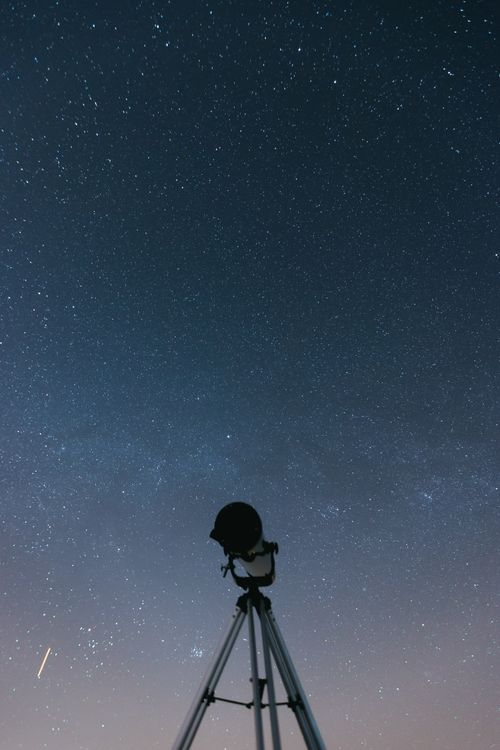
Most people have never looked through a real telescope under a truly dark sky. They have seen photographs of Saturn and the Orion Nebula, and they have looked at the Moon with their own eyes. What they have not done is put their eye to an eyepiece on a cold, clear night in Estes Park and watched a planet snap into focus. That is what this post is about.
It starts with your eyes, not the telescope
A good telescope evening does not start at the eyepiece. It starts with your eyes. The first twenty minutes are for adjusting to the dark while the guide points out the constellations with a laser pointer. This is the part people skip in their heads, and it is the part that makes the telescope work, because dark-adapted eyes see more through the eyepiece too.
Then comes the Moon, if it is up, or the brightest planet. These are the easy wins, the objects that make first timers say something out loud.
The Moon: the first look that stops people
The Moon through a telescope is the single most surprising sight of the night. With the naked eye it is a bright disc. Through the eyepiece it becomes a landscape: craters with sharp rims and long shadows, mountain ranges, and dark plains. The best views come along the terminator, the line between light and dark. A full moon is bright enough to wash out the detail, so the most dramatic views come a few days either side of full.
Guests on our guided evenings also capture the Moon and the planets with their own phones through the telescope, so the view goes home with you.
Saturn and Jupiter: the two that make the night
Saturn is the one people do not believe. The rings are real, sharp, and tilted, floating around a pale gold ball. Jupiter is the other showpiece: a banded disc with its four bright moons in a line. Watch for a few minutes and you can see the moons have moved.
Which planets are up depends on the season. Venus shows phases like the Moon. Mars, when it is close, shows a small orange disc. Planets do not twinkle the way stars do, which is how you pick them out first.
The deep sky: nebulae and clusters
After the planets comes the deep sky, and this is where a telescope earns its keep. The Orion Nebula looks like a glowing cloud with young stars at its heart, and through a telescope it shows structure and texture. The Pleiades resolves into dozens of individual suns. The Double Cluster in Perseus shows hundreds of stars packed into a small patch of sky.
What a telescope does not do is show you the colorful photographs. Nebulae through the eyepiece are soft gray and green, because your eyes cannot register color at such low light. That is not a disappointment. It is the real thing.
How a guided telescope evening flows
A guided evening moves at the pace of the sky. The guide picks the targets in order of what is best placed at each hour, finds them with a computer-guided telescope, and talks you through what you are seeing while you look. You look, you ask, you look again. Between telescope views, the guide reads the naked eye sky and tells the stories that belong to it.
Our Dark Sky Astro Experience is built around this kind of evening for private groups, with telescope viewing, a chance to photograph the Moon and planets through the scope, a night group photo under the stars, and a thermal camera look at the wildlife moving in the dark: https://estesparktourguides.com/pages/dark-sky-astro-experience
Our public Stargaze tour runs on clear nights in Rocky Mountain National Park, with extra headlamps, binocular views, and telescope views through the evening: https://estesparktourguides.com/products/hikebyheadlamp
What to bring and what to expect
Bring warm layers, even in summer. You will be standing still in the dark, and standing still gets cold fast. Bring a phone if you want photos through the scope, and keep it warm between shots. Do not bring a white flashlight. One white beam resets everyone's night vision.
Expect the evening to last a couple of hours, and expect the sky to do most of the talking. The telescope is the tool. The experience is standing under a dark sky in the mountains with someone who knows where to look.
Quick answers
What will I see through a telescope in Estes Park? The Moon's craters, Saturn's rings, Jupiter's moons, the Orion Nebula, and star clusters, depending on the season.
Can I take photos through the telescope? Yes, with your own phone held to the eyepiece, and your guide can help you get the shot.
Go with a guide
If you would rather go with someone who knows the trails, the sky, and the seasons, our guides lead trips in Rocky Mountain National Park and around Estes Park every day. See the guided tours and pick the one that fits your trip.
-
Posted in
Stargazing and Night Sky